
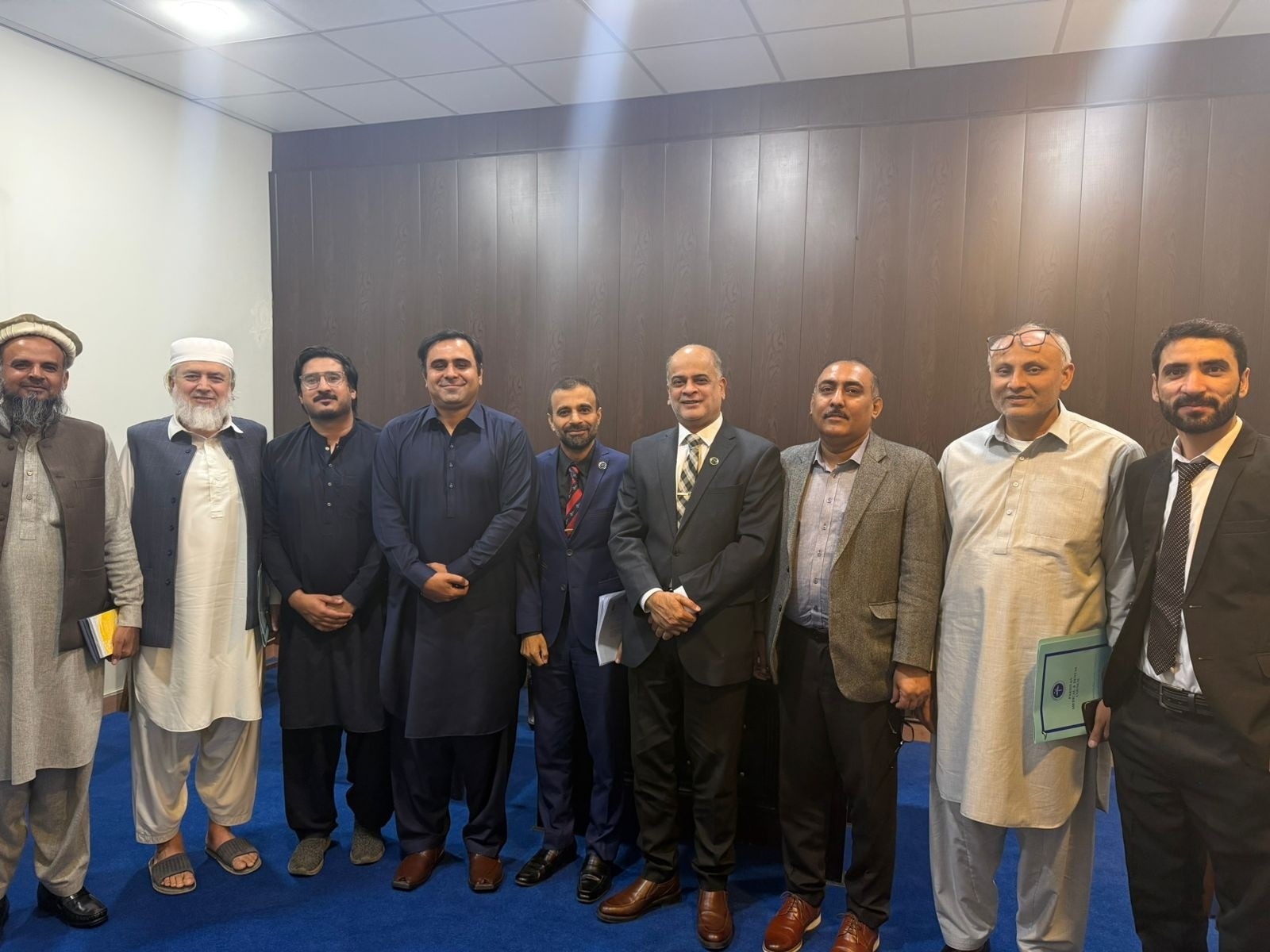
A productive meeting with senior Pakistan Medical and Dental Council officials, presided over by Registrar Syed Rehan Asghar Naqvi, produced a range of commitments aimed at improving FMG licensing and examination processes for foreign medical graduates in Pakistan.
The Registrar confirmed that PMDC will contact ProMetric officials soon to resolve outstanding contract matters affecting exam delivery, a move expected to stabilise future test administration for candidates sitting licensing exams.
PMDC indicated it will standardize the passing percentage for foreign medical graduates at 50 percent, aligning FMG licensing criteria with the local standard and widely accepted international practice to avoid dual systems that harm students’ prospects.
Doctors who enrolled and graduated before the implementation of the ECFMG criteria will be allowed to sit examinations provided their universities are recognised by WHO, WWCAN and the World Health School Directory. Relevant official enrolment and graduation data will be submitted to PMDC to support eligibility verification.
As part of efforts to ensure fair clinical training and placement, PMDC will issue directives to universities and hospitals to implement paid house jobs and to allocate specific seats for foreign medical graduates, with proposals including designated quotas per hospital across provinces to improve access to supervised clinical experience.
The PRMP matter will be taken up at council level to ensure facilitation for all candidates. PMDC assured stakeholders that no law will be applied retrospectively and that PRMP and full licensing processes will proceed without unnecessary delay.
Examination reforms were also agreed: an annual exam schedule will be published, exams will be held four times a year, and agreements with the National University of Medical Sciences will aim to ensure consistent implementation. PMDC will upload exam keys publicly and has been asked to include sample questions to assist candidates preparing for NUMS-based assessments.
To align with international standards and ease candidate burden, mandatory stations will be removed and the cap on the number of attempts will be lifted, changes that directly affect FMG licensing pathways and remove barriers for repeat candidates.
Regarding permanent licensing after NRE-2, PMDC statistics show that of 1,500 successful NRE-2 candidates only 450 have applied for permanent licences. Successful candidates who have not yet applied are urged to do so; assistance is available and PMDC will verify passing data in coordination with the Registrar.
Students who cleared NRE-1 but were prevented from appearing in NRE-2 due to retrospective policy changes will now be permitted to sit NRE-2, restoring opportunity for those affected by earlier decisions.
PMDC has agreed to establish a Special Facilitation Center dedicated to foreign medical graduates and foreign-qualified doctors to centralise degree, house job and university qualification verification. Verification will be completed once rather than repeatedly, a practical step emphasised by the Registrar as part of a broader commitment to transparency and international standards.
Participants expressed appreciation for the Council’s engagement and swift response. The Registrar’s remark that “Our mission is to facilitate students, not to discriminate against them” was cited as a guiding principle for upcoming reforms. Stakeholders will remain in close contact with PMDC to follow up implementation, and foreign medical graduates welcome these measures as important steps toward equitable FMG licensing and professional integration in Pakistan.
Share this content:
Leave a Reply