
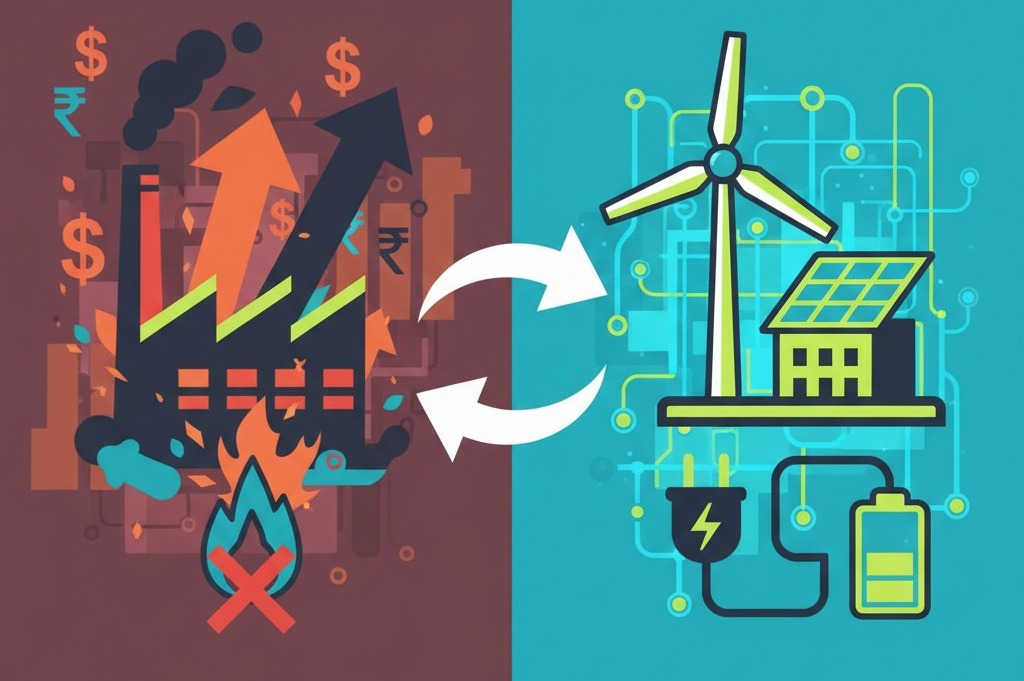
Experts at a Sustainable Development Policy Institute webinar warned that rising energy costs are placing Pakistan’s industrial sector under severe pressure and urged a gradual shift from gas to electricity and renewable energy to protect long‑term competitiveness.
At the event titled Rising Energy Costs and the Future of Sustainable Industry in Pakistan, Dr Sajid Amin Javed, SDPI Deputy Executive Director, outlined market scenarios for crude oil, saying markets now see a 50% probability of prices reaching USD 130–150 per barrel in the near term, a 10–20% chance they will remain at that level for six to eight months, and a 30–40% likelihood of stabilising around USD 110–120 with USD 110 as the expected average. He warned that such shifts could push inflation up by 10–12%, raise the import bill by roughly USD 6 billion and slow GDP growth to 2.5–2.8 percent, while prolonged LNG disruptions would further strain energy‑intensive industry.
Engr. Ubaid ur Rehman Zia, Head of SDPI’s Energy Unit, described three waves of impact: a structural sickness as rising energy costs and mandated reforms disrupted self‑generation and shifted energy to non‑productive uses; a limited relief where a February 2026 tariff cut of nearly Rs4 per unit was largely offset by a Fuel Charges Adjustment of Rs1.78 and a Rs1,243 per MMBtu levy on off‑grid captive power, prompting formal protests by textile exporters; and a geopolitical shockwave marked by WTI crude swinging from about USD 75 to 110 before settling around USD 84–90, signalling ongoing uncertainty. He called for urgent policy reform, industrial electrification and accelerated renewable adoption to stabilise costs.
Saleha Qureshi, lead of the Pakistan Industrial Decarbonization Programme at SDPI, emphasised vulnerability in fuel and power imports as LNG prices climbed to USD 15.77 per MMBtu, noting Pakistan imports roughly 80 percent of liquid fuels and about 20 percent of its power mix. A recent petrol hike of around Rs55 per litre has already lifted logistics costs by roughly 12 percent, creating what she described as a triple shock from electricity tariffs, gas prices and feedstock costs.
Syed Mohammed Osama Rizvi, Global Market and Product Strategist at Primary Vision, pointed to a misaligned refining configuration where many refineries still use hydro‑skimming technology and produce furnace oil instead of high‑demand fuels like high‑speed diesel, leaving Pakistan dependent on imports for 40–45 percent of refined products and adding to pressure on industry margins amid rising energy costs.
Sheikh Mohammed Iqbal, former CEO of the Pakistan Textile Council, warned that rising energy costs combined with taxes threaten export competitiveness against regional peers such as Bangladesh and Sri Lanka. He stressed that for Pakistan to compete, electricity must become cheaper and more predictable through tariff rationalisation, reduced inefficiencies, grid upgrades for reliability, and faster deployment of renewables, energy storage and electric vehicle infrastructure.
Muhammad Abdul Rafay of Alternate Law Collective argued that industries should not be forced to choose between an unreliable grid and costly captive power, calling instead for long‑term planning, a flexible and investable grid, transparent pricing and rules that enable efficient load management and renewable integration. He also flagged a misalignment between national electricity reforms and the IMF Extended Fund Facility as a source of policy uncertainty for investors and industry.
Manzoor Ahmed Alizai from the Policy Research Institute for Equitable Development urged a two‑track approach: rationalise industrial tariffs while integrating renewable energy, strengthen the grid and ensure market rules allow reliable access to competitively priced electricity. He said robust demand forecasting, clear electrification targets and credible planning are essential so investments in generation, transmission and grid flexibility are made ahead of demand rather than reactively.
Speakers collectively urged policymakers, regulators and industry to prioritise industrial electrification, renewable deployment and predictable tariff frameworks so Pakistan can mitigate the impact of rising energy costs, protect jobs and preserve export competitiveness.
Share this content:
Leave a Reply