

 admin
admin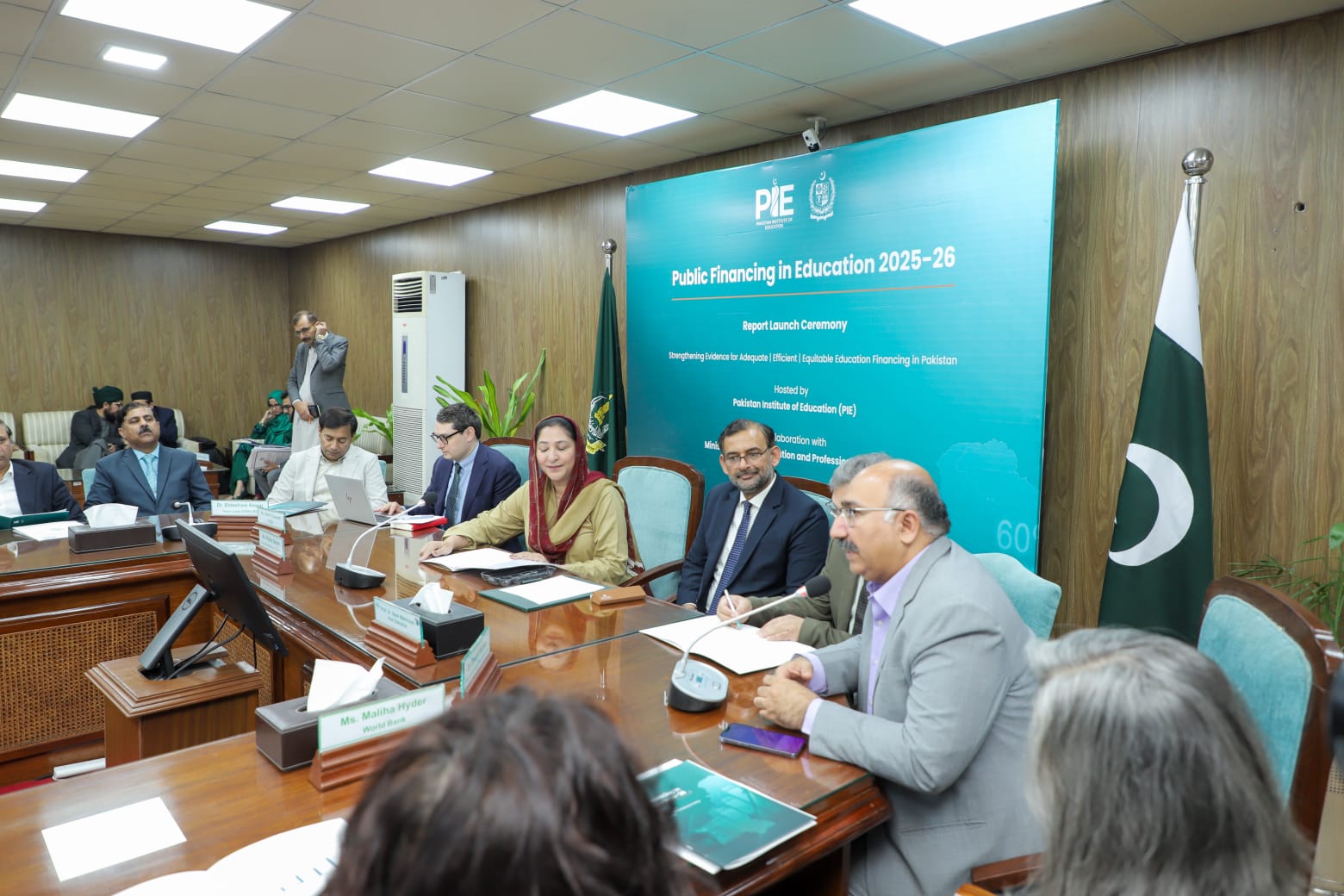
The Pakistan Institute of Education has published the “Public Financing in Education 2025–26” report showing a 72% rise in overall education spending over the past five years while warning that fiscal gains have not translated evenly for students across the country. The analysis calls for a steady move toward the international benchmark of 4–6% of GDP to address the persistent access and quality gaps affecting millions of children.
The report highlights stark regional disparities in per-student allocations, with figures ranging from PKR 22,332 in Gilgit-Baltistan to PKR 72,124 under the Federal Directorate of Education, reflecting differing administrative structures and fiscal capacity. Despite overall growth, current tracking systems remain unable to reliably trace how resources reach the estimated 25.37 million out-of-school children, many of whom are girls in rural areas.
Key recommendations include adopting a standardized budget tagging system and harmonized financial codes across provinces to improve accountability and comparative analysis. The report also advocates introducing gender, locality and school-based budgeting within existing financial platforms so that increased education spending is used transparently and targets the most disadvantaged learners.
At a launch event hosted at Allama Iqbal Open University, officials underlined the role of data-driven policy. Ms. Wajiha Qamar, Minister of State for Federal Education and Professional Training, described the findings as essential for long-term planning and equitable resource distribution. The report was prepared by PIE in collaboration with the World Bank and the Foreign, Commonwealth and Development Office, and was presented alongside remarks from development partners including representatives of the British High Commission, World Bank, UNICEF and the Malala Fund.
Provincial spending trends showed dramatic percentage increases: Gilgit-Baltistan 318% and Sindh 286% with Sindh’s budget rising from PKR 169 billion to PKR 654 billion. Among larger provinces, Punjab recorded a 122% increase and Khyber Pakhtunkhwa 141%, while the federal level registered the lowest growth at 45%. The report stresses the need to expand non-salary budgets without undermining salary commitments to sustain teaching quality while improving facilities and learning materials.
By combining improved financial coding, transparent budget tagging and targeted gender-responsive measures, the study argues that Pakistan can optimize public resources and make meaningful progress in reducing the number of out-of-school children and improving learning outcomes. The emphasis on education spending as a policy priority is framed as essential to carrying forward equitable reforms across provinces and districts.
Share this content: